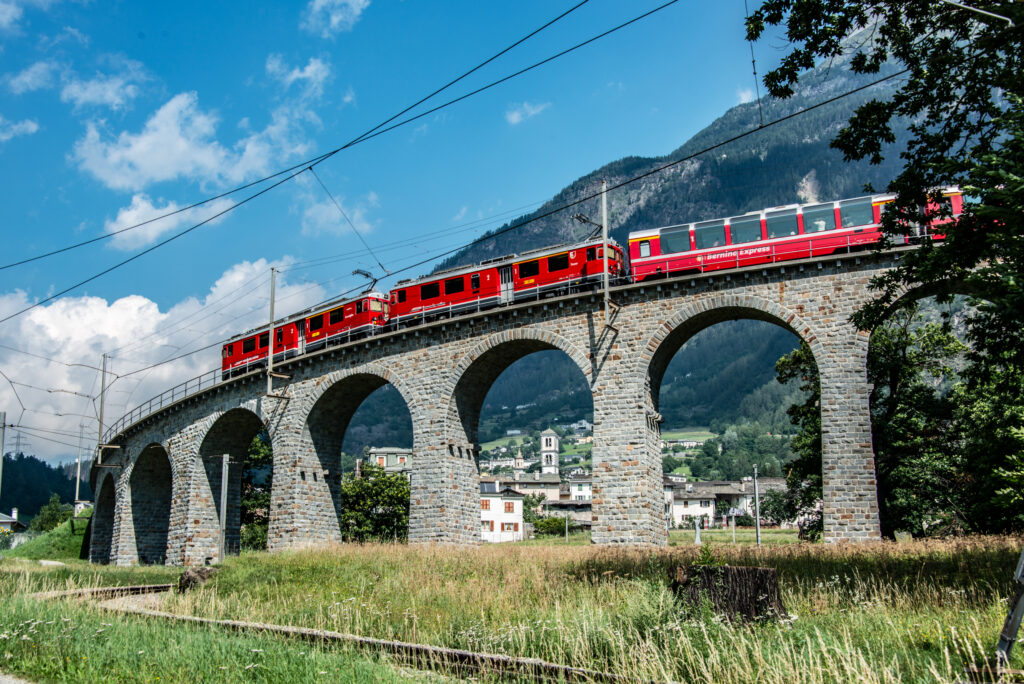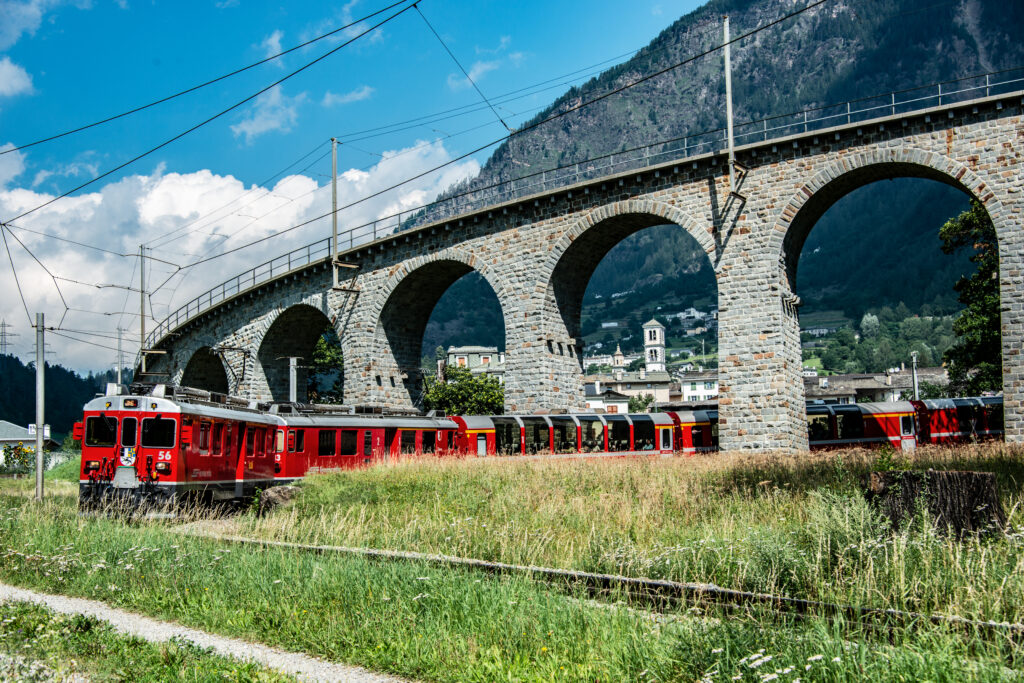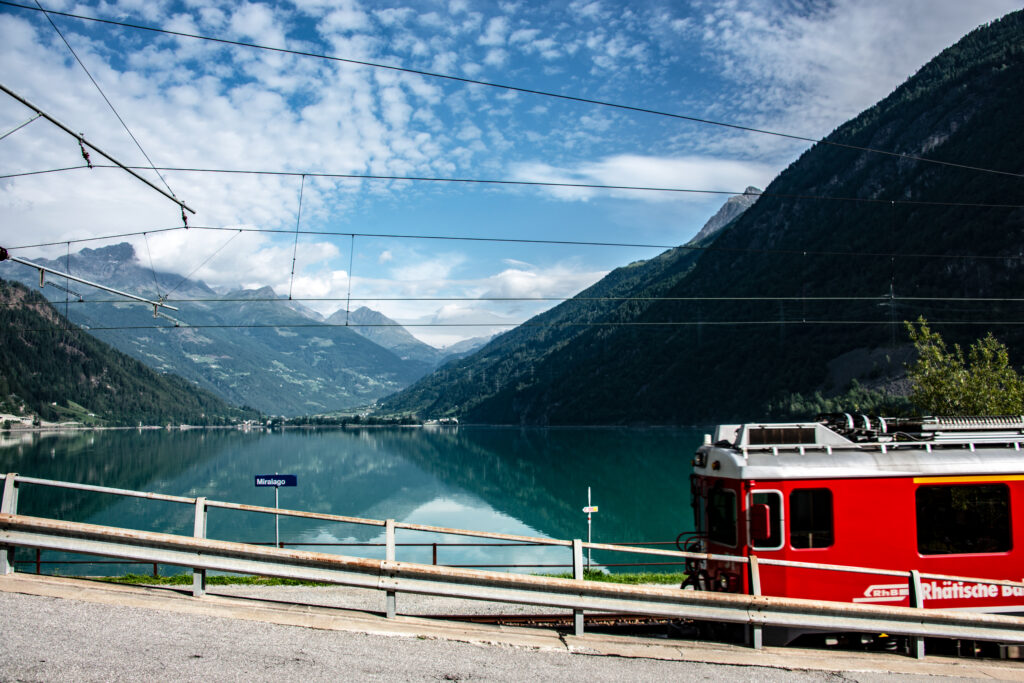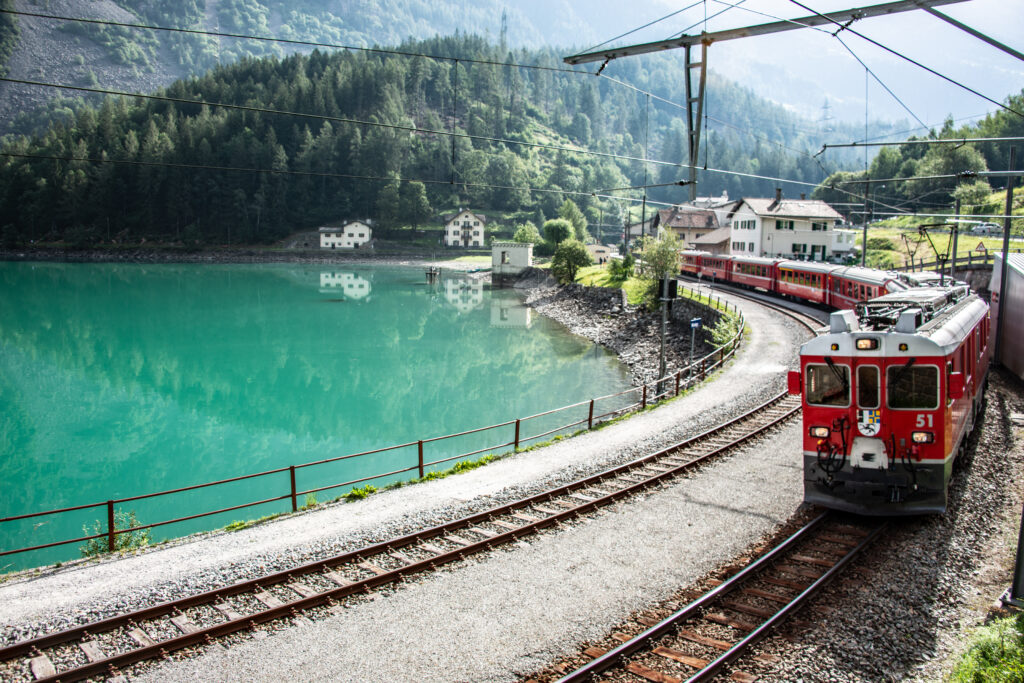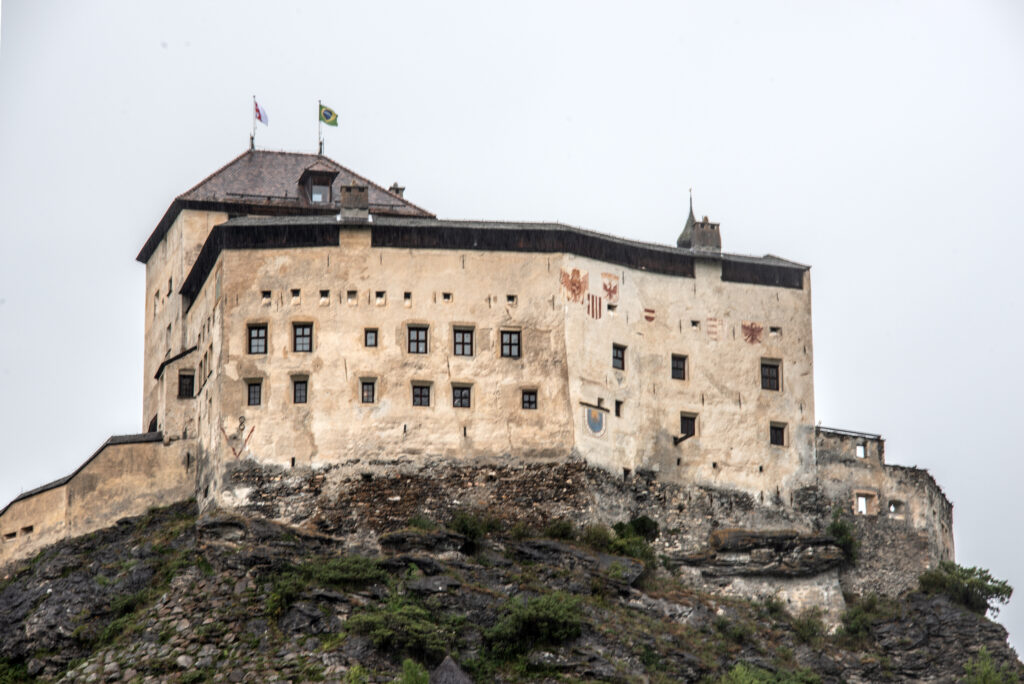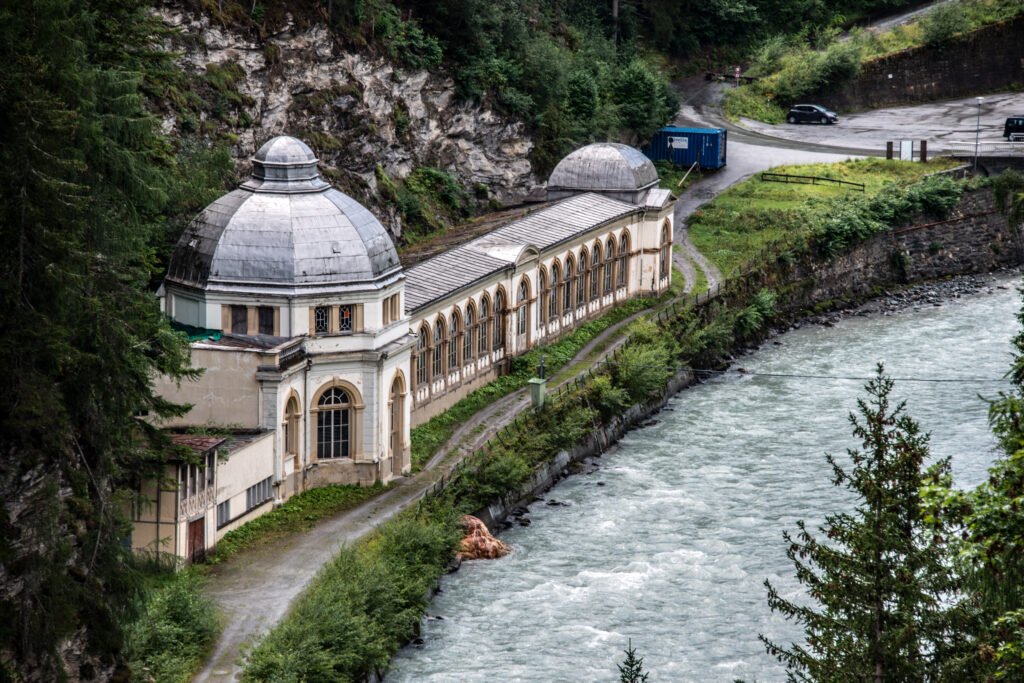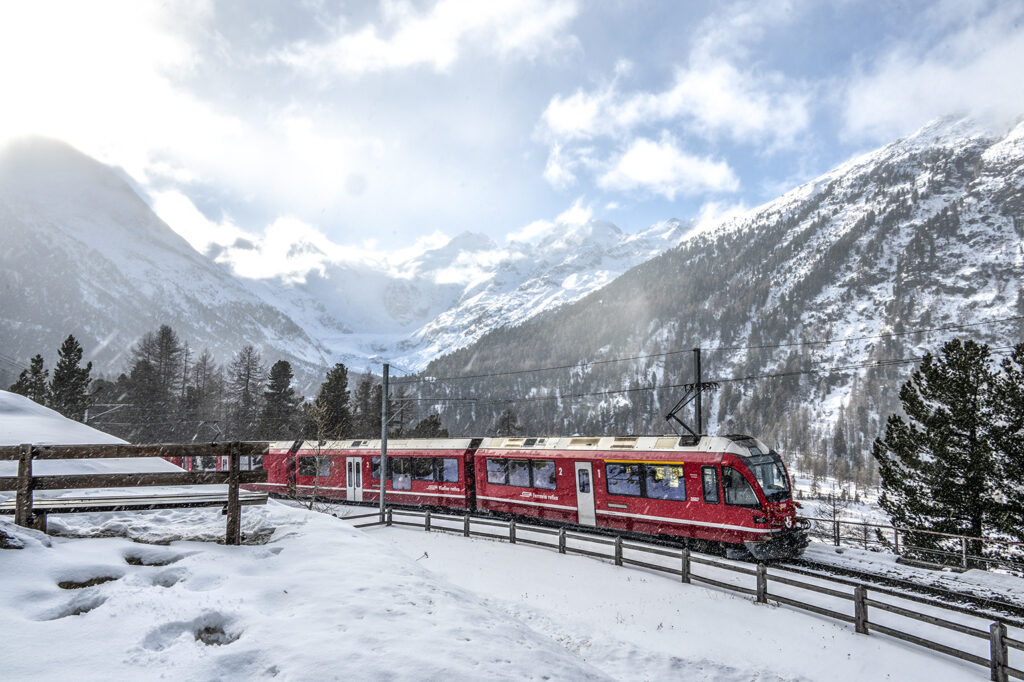
The Bernina Railway, now more than a century old, is a unique masterpiece of civil engineering. Expertly designed to traverse the high Alps, it is one of the highest transalpine railway lines and one of the steepest adhesion railways in the world, with gradients reaching up to 70‰ (7%). The line runs alongside stunning alpine lakes, passes through picturesque traditional Swiss villages, and crosses one of the world's rare spiral viaducts. Throughout the journey, the railway winds its way through extraordinary mountain terrain, showcasing remarkable engineering achievements. In recognition of its outstanding historical, cultural, and technical significance, the Bernina Railway was inscribed on the UNESCO World Heritage List in 2008.
This is a fascinating journey through an unspoiled natural landscape, offering breathtaking scenery such as the Morteratsch Glacier and the majestic summit of the Bernina Pass.
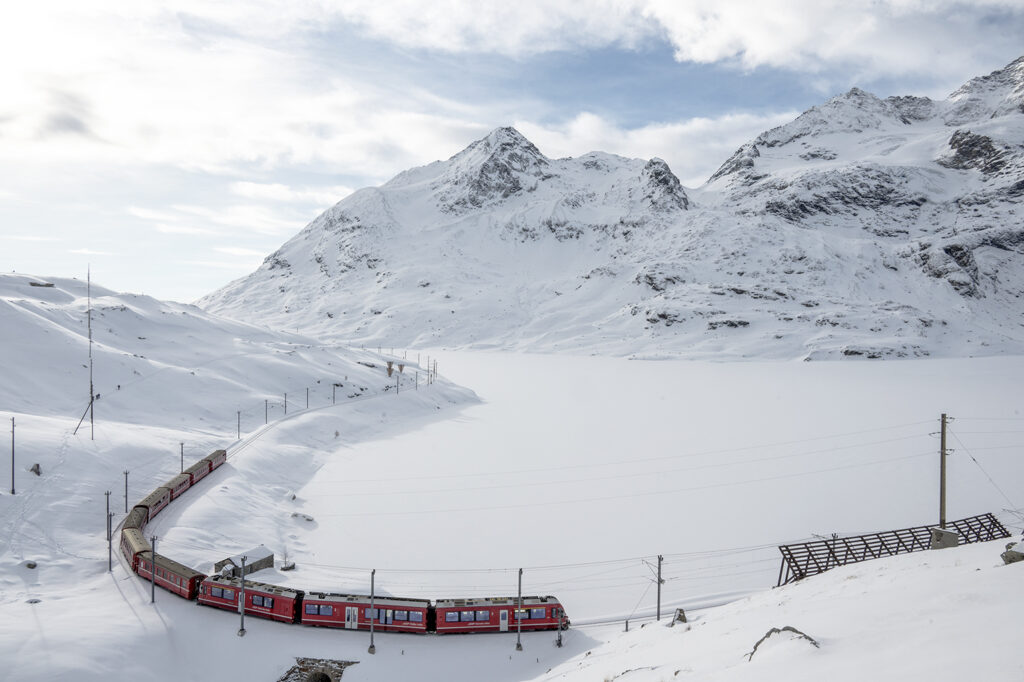
Modern, comfortable trains provide over two hours of ever-changing and truly spectacular scenery, where nature takes center stage and inspires nothing but admiration for such an extraordinary engineering achievement.
Originally built to meet the need for freight transportation, the railway was initially operated with yellow carriages. With the arrival of the new millennium, however, the line underwent a significant transformation, enhancing its appeal as a tourist destination and offering passengers a much higher level of comfort. In 2000, the new red panoramic coaches entered service. Built by Stadler Altenrhein and designed by Pininfarina, they feature 34 seats in First Class and 44 seats in Second Class, allowing passengers to enjoy breathtaking views through their large panoramic windows.